Pico Balloons

The APRS tracker project is in full swing, and I’m thrilled to share the progress so far! With the capacitors, antenna, and solar panels in place, I’m ready to test the tracker’s performance and make any necessary adjustments before its launch at Field Day.

Did some ground tests for the APRS tracker we are planning to launch at Field Day this year. Man these capacitors took forever to charge using a USB power bank! Thought I would document what I’ve done so far if anyone cares to follow or wishes to use this to build your own.
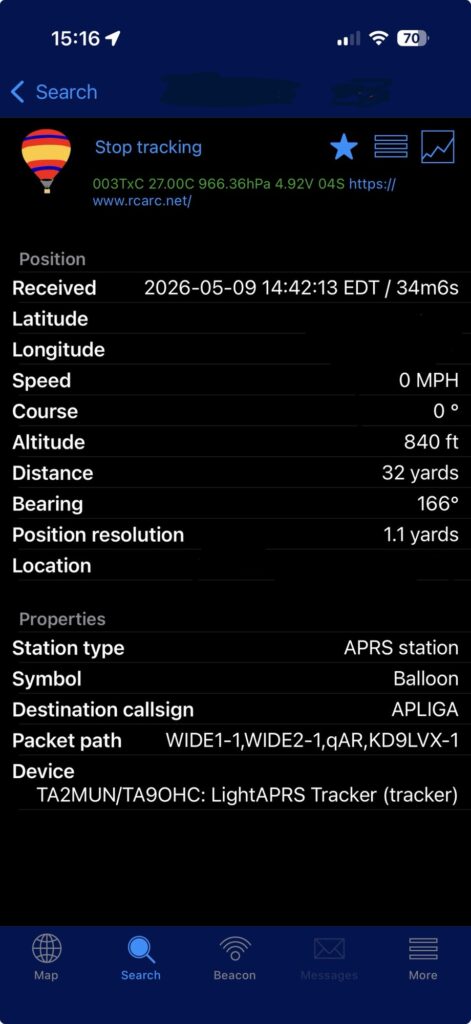
APRS packet shown on APRS.fi

The one picture is the APRS packet. Notice at the top I’m transmitting telemetry from the tracker including temperature, pressure (for altitude reference), and voltage (for battery monitoring). Also doing a plug for the club website.
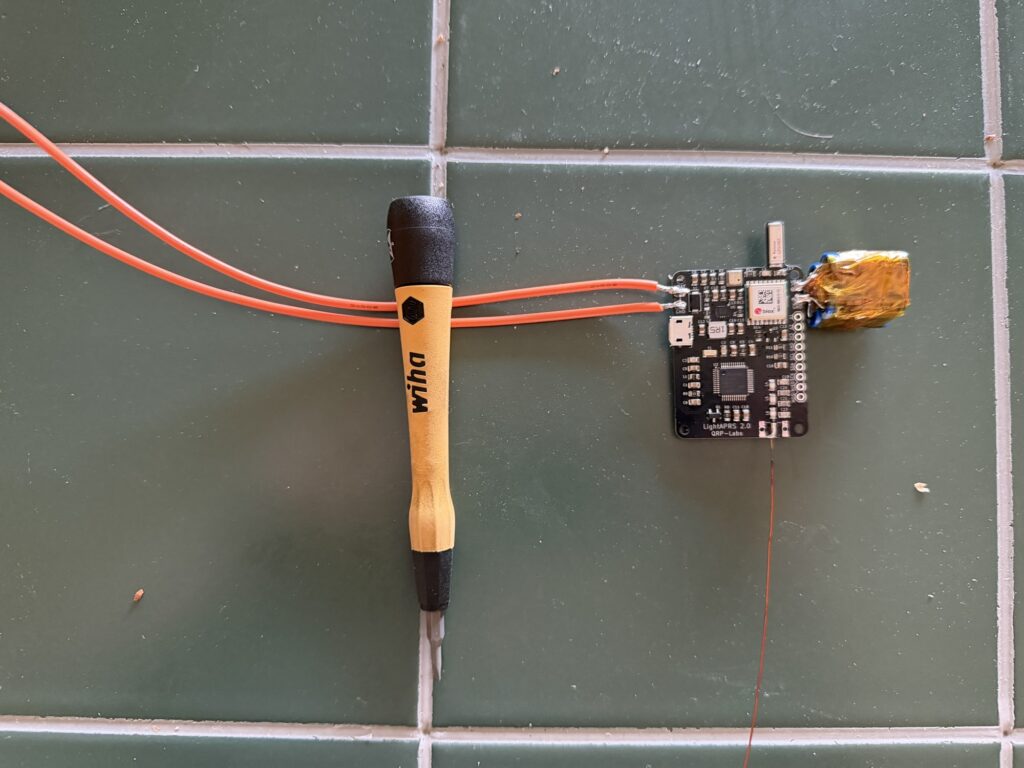
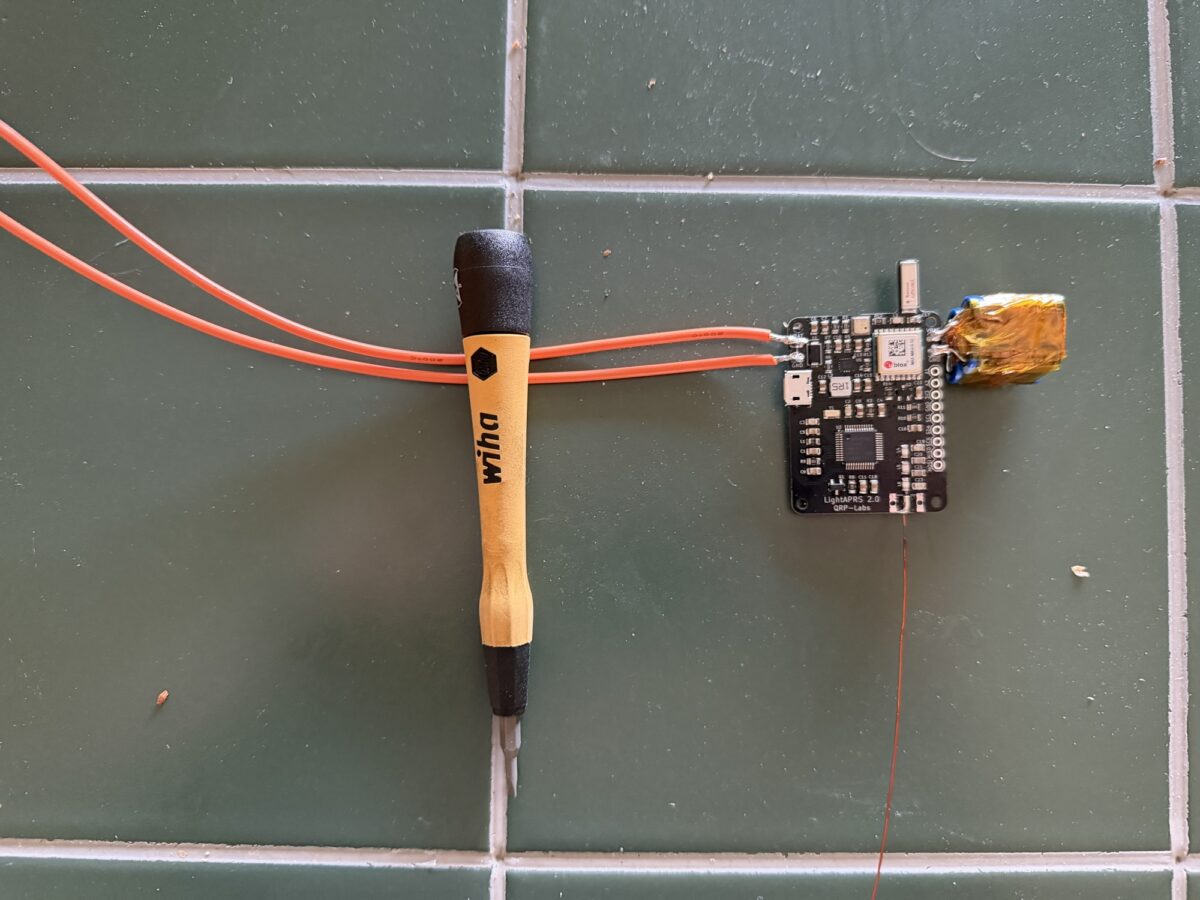
LightAPRS 2.0 tracker

Other picture is of the tracker. Some stats:

Output varies from 0.5-1.0 watt depending on the charge level of the capacitors.

The capacitors are 3.0 volt 3.3 farad. There are 4 in series-parallel to give 6.0 volts and 3.3 farad.

CAPACITOR 3.3F 0% +100% 3V T/H

The antenna is 26ga enameled wire at 50cm. It’s a monopole antenna which is fine since the tracker is meant to be up in the air.

Solar is pending arrival from DigiKey. I’ll be using 2×2.76 volt 55.1 mA monocrystalline solar panels in series. This will give me 5.52 volts at peak sun which is near perfect for my capacitors.

MONOCRYST SOLAR CELL 123MW 2.76V

I’ve got plenty of both Mylar and CyMylar balloons, but this tracker is likely to be a bit on the heavy side. I’m at 15.1 grams so far and im not sure yet what the solar package will weigh. To be safe I’ll use the 60” CyMylar balloon.

60Inch Jumbo Large 4D Clear Sphere Balloons/Transparent Foil Balloons

Next step is to wait on the solar panels and figure out how I want to arrange/attach them.

Field Day 2024

Wow a lot has changed!

This year we elected to participate in Field Day from the training facility where we hold our club meetings. The start of summer has come hard and hot with high temps and dry landscapes. Operating in the field is preferable though many of us would not last much more than an hour of operating. That is if we survive setting up antennas first!

KD9BGS decided to try his balloon antenna again!

The training facility offers some creature comforts. Namely, air conditioning. Being hams, we also like to put on a feast. Having access to mains and refrigerators also made this a bit easier. No complaints there!

K9TC setup his impressive hex beam!

There were some downsides as well. Our facility has a VHF/UHF antenna as well as an EFHW wire antenna. Both work well for the club station that is setup there. Aside from launching a balloon or using a hitch mount, there want much room for any additional antennas. Even setting up a vertical would be very close proximity and could cause more interference than wanted.

Look at the map filling up!

We still had a great time operating. K9TC really showed us why the hex beam is commander among our wire antennas. Worked Hawaii twice on 15m! The rest of us hunted what we could in the lower bands and still made some decent contacts. I did hear the European contest happening and tried responding but alas they could not hear me.

As with any operation, we see what works well, what could be better, and what we should maybe not do. We learned, we laughed, we ate, and we had a good time in each others company. Already talking about Winter Field Day!